


25 Aug, 2026
5:30 pm – 7:30 pm
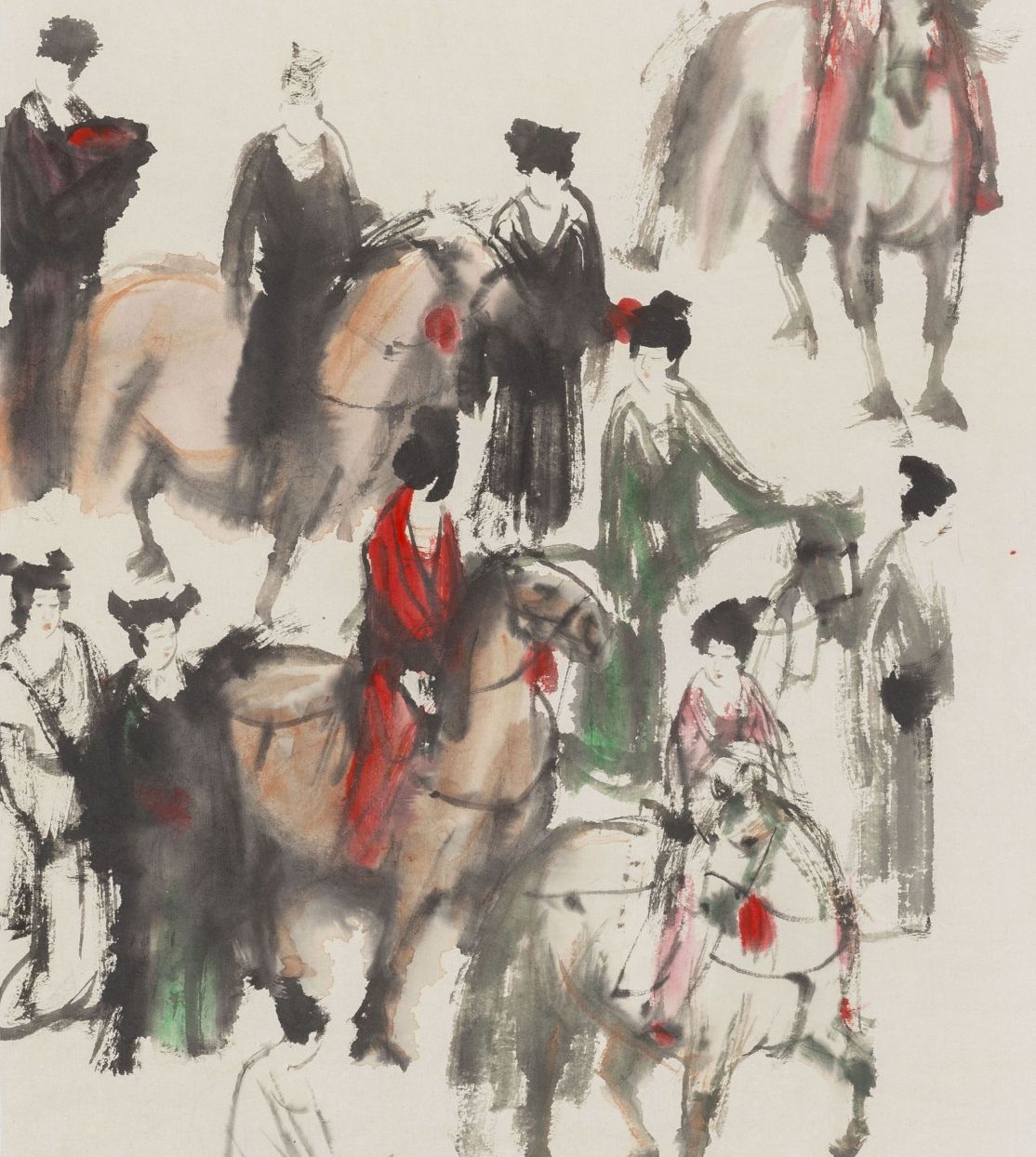
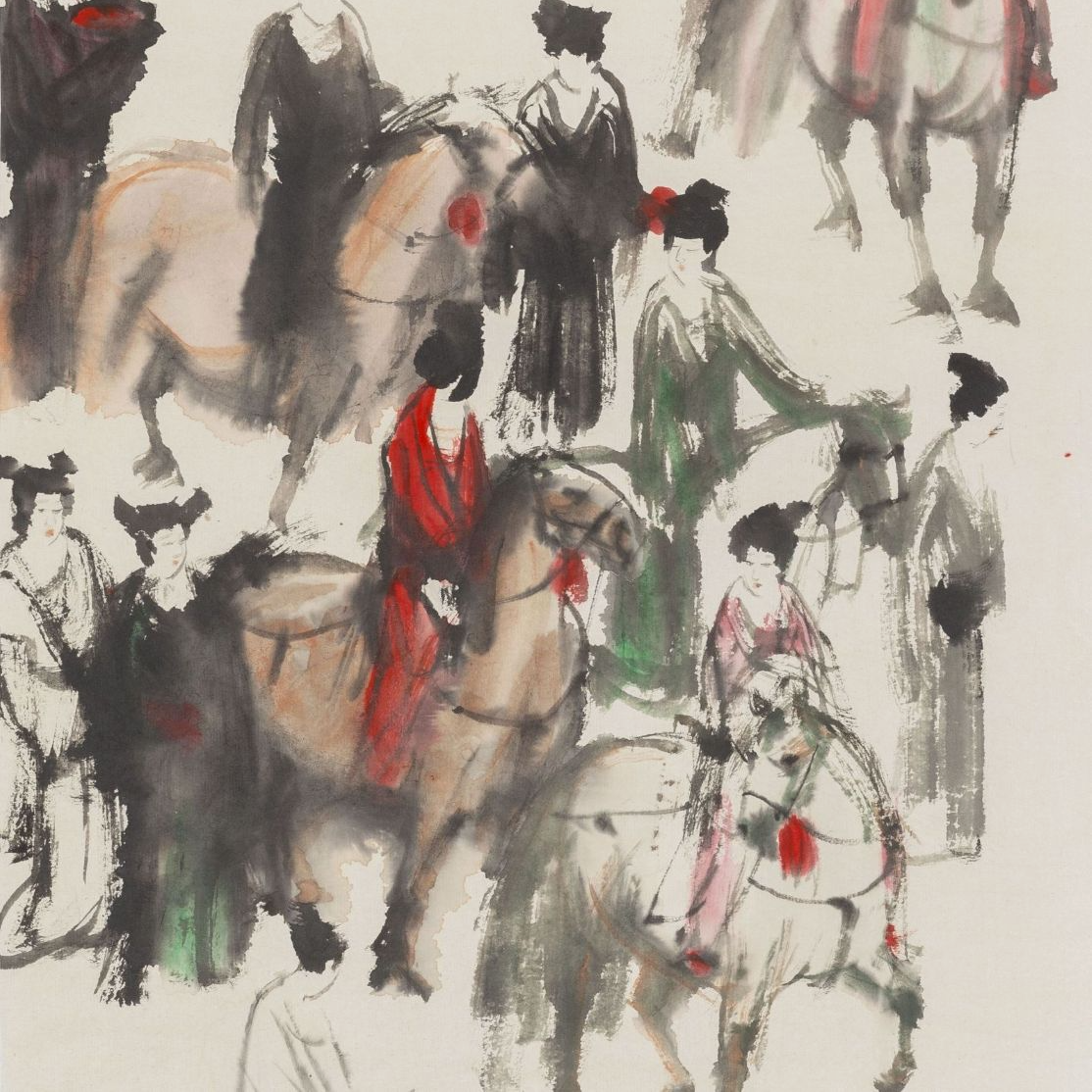
Peng Xiancheng, Poetic Scene of Ladies Wandering (detail), 2021, Chinese ink & colour on rice paper, 133x33cm
Celebrating 45 Years of Championing Chinese Contemporary Ink Art
As part of its 45th-anniversary programme, Then and Now, Alisan Fine Arts presents an exhibition celebrating 4 contemporary literati masters from mainland China whose practices have played a pivotal role in the evolution of contemporary ink painting since the 1980s. Presented at our Central gallery, the exhibition forms the "Then" chapter of a dialogue that examines the continuing transformation of Chinese ink art across generations. Featuring works by Chen Jialing, Jiang Baolin, Lu Fusheng, and Peng Xiancheng, the exhibition highlights 4 artists who have redefined the possibilities of the literati tradition. Together, they represent modern day painter-scholars who each bring a distinctive approach to landscape, figure painting, and the expressive potential of ink.
The exhibition also reflects Alisan Fine Arts' longstanding commitment to introduce contemporary Chinese art from the mainland to international audiences. We have worked with these artists since the gallery's early years, featuring them in landmark exhibitions including A State of Transition: Contemporary Painting from Shanghai (1987) and Modern Chinese Paintings: A Selection from Beijing, Hangzhou and Sichuan (1989). Both exhibitions showcased the artistic landscapes of different regions in China, helping to establish Alisan as an important platform for contemporary Chinese artists during a period of profound cultural change.
From the contemporary bird-and-flower-painting of Chen Jialing, Jiang Baolin's abstract compositions of lines and planes, to Lu Fusheng's highly individual landscape paintings, and Peng Xiancheng's evocative depictions of Tang dynasty figures and horses, the exhibition traces the diverse paths through which these artists have renewed and expanded the language of Chinese painting. Together, they form the historical counterpart to Female Voices in China Now, presented in the coming September at Alisan Atelier, which explores the work of four contemporary women artists and the evolving landscape of Chinese ink practice today.
Chen Jialing & Jiang Baolin: A New Vision
Chen Jialing is a renowned traditional Chinese painter and a leading figure of the contemporary New Shanghai School, best known for his distinctive lotus paintings. Rooted in tradition yet infused with a strong modern sensibility, his work achieves a remarkable balance between classical refinement and contemporary expression. In his compositions, the colour from traditional ink paintings is modulated and tempered, lending his compositions a distinctive sense of elegance and serenity.
Chen’s peer, Jiang Baolin, intended to extend the boundary of Chinese paintings in more than six decades. As a student of masters Pan Tianshou, Lu Yanshao, and Li Keran, Jiang builds his works through layered ink and colour, with interwoven dots and lines creating a dense. In particular, his iconic baimiao (line-drawing) paintings remain among his most recognisable achievements. Unlike traditional baimiao, he abandons texture and shading, reducing the image to abstract rhythmic lines.
Lu Fusheng & Peng Xiancheng: Spirit of Tradition
Influenced by Chinese philosophy and classical literature amidst a wave of Westernization, Lu Fusheng shifted from figure paintings to landscape art in the 2000s. His later works feature elongated, human-like mountains that resonate with the mountain-like facial features of his early figures. His work fuses these two major categories of traditional painting and echoes the Taoist philosophy, “Heaven and earth live together with me, and the myriad things and I are one.” This exhibition focuses on Lu's recent landscape paintings.
Peng Xiancheng is recognised as one of China’s most celebrated artists, renowned for his vibrant depictions of Tang dynasty figures and horses, rendered through expressive washes of ink and colour rather than defined outlines. By infusing traditional subjects with modern feeling, he evokes the spirited vitality of the Tang Dynasty through an expressive brushwork and a lyrical, atmospheric sensibility. Peng is particularly adept at transforming the poetic imagery of classical verse into richly evocative visual form.Powered by Froala Editor
Powered by Froala Editor
Address: 21/F, Lyndhurst Tower, 1 Lyndhurst Terrace, Central
Opening Hours: Mon–Sat 10am–6pm
Phone: +852 2526 1091
Website: alisan.com.hk